Shannon Denton is Co-Founder and CEO of Wripple, an on-demand talent platform helping companies build and manage flexible marketing teams. Previously Global CEO of Razorfish, Shannon has spent his career at the intersection of technology, marketing, and organizational transformation. Today, he works with marketing leaders navigating the impact of AI on talent, teams, and operating models, with a focus on building more agile, high-performing organizations.
Selected Deliverables
No items found.
About this blog series: AI is changing what marketers can do and how marketing teams get work done. In this series, we explore the evolution of the AI-enabled marketing team, from giving every marketer an AI teammate to building connected, agentic workflows. The goal: human-led, AI-powered teams that deliver better work, faster.
This article explores Stage 1 of our four-stage approach to AI-enabled marketing teams. For the full framework, start with The Marketing Unicorn Is Still Human.
Most marketing teams are already in Stage 1. Very few of them got there on purpose.
Someone expensed a subscription. Someone else started drafting in a chat window. A third person built a workflow nobody else knows about. Six months later the CMO discovers that AI adoption already happened, and nobody decided anything.
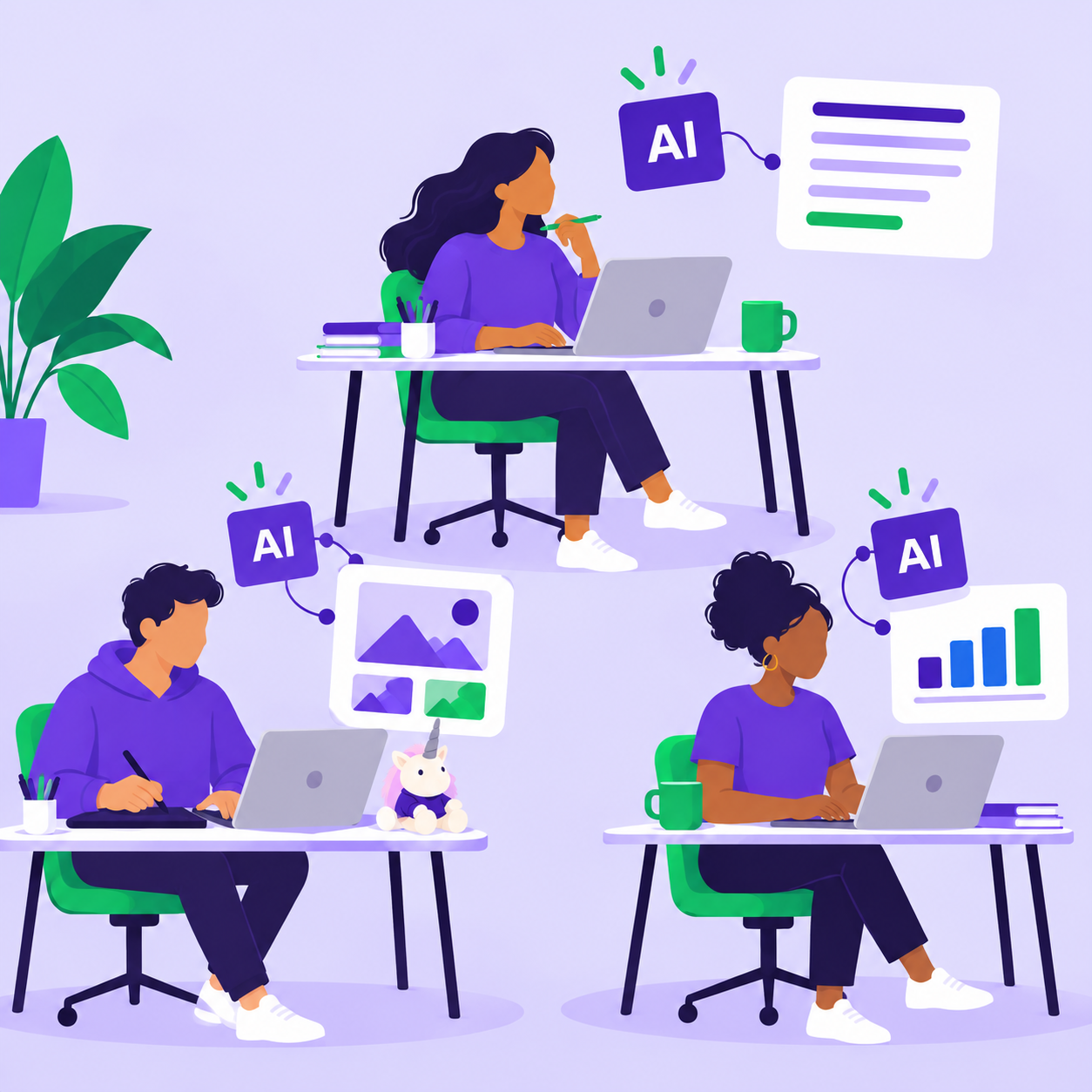
That's Stage 1 by accident. Stage 1 on purpose looks like this: every role picks up an AI teammate, inside the work they already do.
What it looks like, role by role
The strategist researches an audience in an afternoon and spends the saved weeks on the interpretation, which was always the valuable part.
The planner drafts a channel plan and a flighting scenario, then argues with it rather than building it from scratch.
The creative generates twenty directions to react to, kills eighteen, and takes two somewhere a blank page wouldn't have gone.
The copywriter never faces the empty document. Twelve headlines exist in thirty seconds. Ten are bad. That's fine because the two that aren't are the starting point.
The media lead pressure-tests assumptions and builds the scenario comparison that used to take a day in a spreadsheet.
The analyst stops being a query bottleneck for the whole team, because the rest of the team can ask their own questions in plain English.
Notice what's constant: nobody changed jobs. The strategist is still a strategist. The work each person does is the same work, started from a better place.
The real benefit isn't speed
Speed is what gets claimed, because it's easy to measure and easy to sell. And it's real; going from three weeks to an afternoon is not a rounding error.
But the benefit that compounds is the floor.
Before AI, the quality of any given piece of work was bounded by two things: how good the person was, and how much time they had. Time pressure is why good marketers ship mediocre work, not lack of skill, lack of runway. The first draft was bad because there wasn't time for a second.
With an AI teammate, the first draft is no longer the bottleneck. Every role starts from a better first draft. The strategist's Tuesday morning starts with something to critique instead of something to conjure. The reviewer's job shifts from catching the obvious to making the judgment call.
The ceiling doesn't move much at this stage. The floor moves a lot. Across a team of twelve, across a quarter, that's the bigger number.
What breaks
Two things, reliably.
No tool matrix. Six people expensing six overlapping subscriptions is not an AI strategy, and it's not even cheap. Nobody knows which tool is sanctioned, nobody shares what works, and procurement finds out in the worst possible way. Decide which tool belongs to which role. Write it down. Fund it centrally.
No training budget. This is the bigger failure. Access without craft produces confident mediocrity at volume, which is worse than nothing because now someone has to review it. The distance between a good prompt and a bad one is the distance between a usable draft and a waste of an afternoon, and that skill is learnable, teachable and completely unevenly distributed right now.
There's a third, quieter failure: treating the output as finished. Stage 1 produces better first drafts, not better final work. Teams that forget the second half of that sentence ship worse work faster, and then conclude AI doesn't work.
The move worth making this quarter
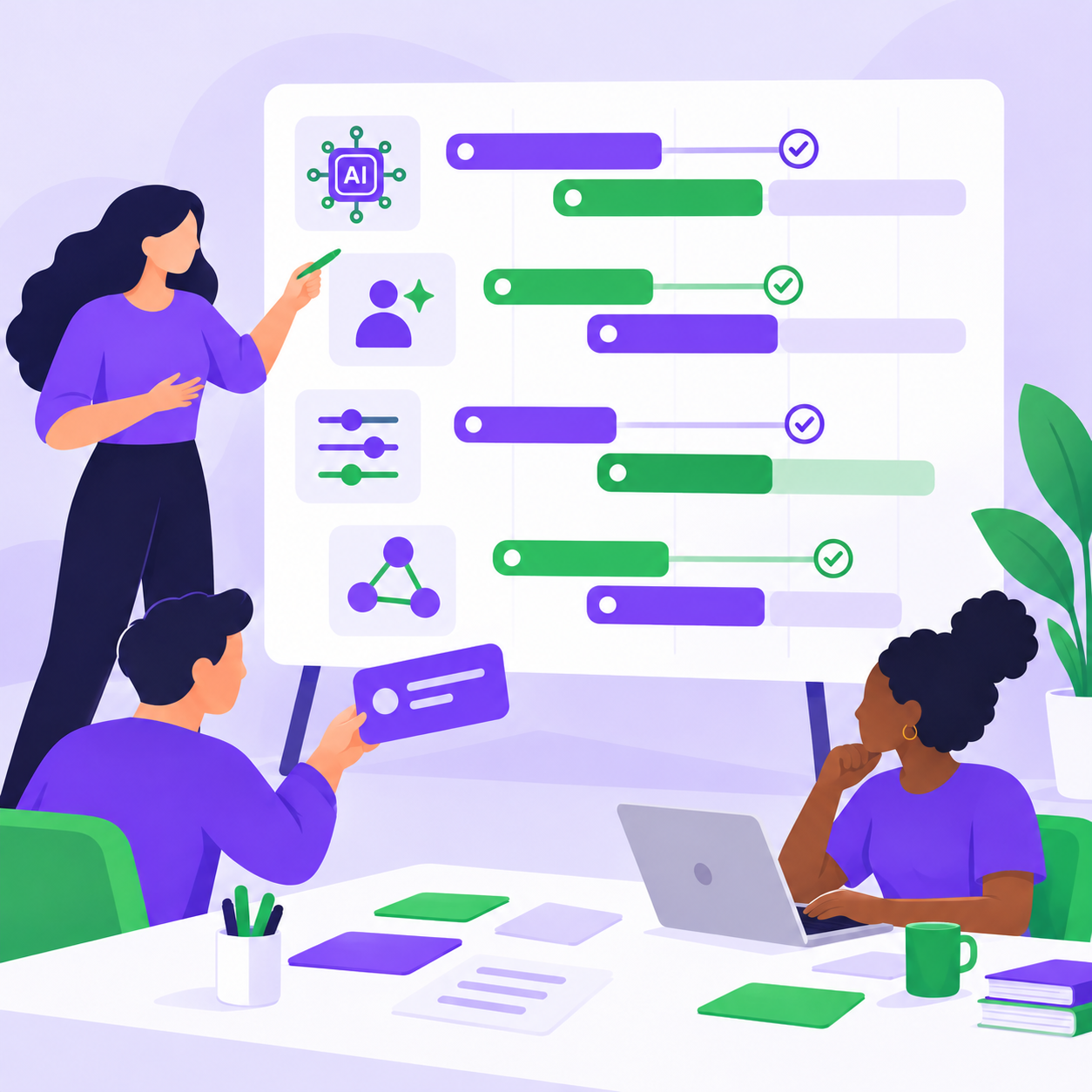
Build the role-by-role tool matrix. Fund the subscriptions and the training.
That's it. It's unglamorous and it's the thing almost nobody has actually done. One page: role, tool, what it's for, who owns the license, what training exists. Three months, not three years.
Do that and you've converted accidental Stage 1 into deliberate Stage 1, which is the only version you can build anything else on top of.
Stage 2 next: what happens when one experienced marketer takes this seriously.
To learn more about any or all of these solutions, contact your Wripple Client Lead, or request a demo.
About this blog series: AI is changing what marketers can do and how marketing teams get work done. In this series, we explore the evolution of the AI-enabled marketing team, from giving every marketer an AI teammate to building connected, agentic workflows. The goal: human-led, AI-powered teams that deliver better work, faster.
This article explores Stage 1 of our four-stage approach to AI-enabled marketing teams. For the full framework, start with The Marketing Unicorn Is Still Human.
Most marketing teams are already in Stage 1. Very few of them got there on purpose.
Someone expensed a subscription. Someone else started drafting in a chat window. A third person built a workflow nobody else knows about. Six months later the CMO discovers that AI adoption already happened, and nobody decided anything.
That's Stage 1 by accident. Stage 1 on purpose looks like this: every role picks up an AI teammate, inside the work they already do.
What it looks like, role by role
The strategist researches an audience in an afternoon and spends the saved weeks on the interpretation, which was always the valuable part.
The planner drafts a channel plan and a flighting scenario, then argues with it rather than building it from scratch.
The creative generates twenty directions to react to, kills eighteen, and takes two somewhere a blank page wouldn't have gone.
The copywriter never faces the empty document. Twelve headlines exist in thirty seconds. Ten are bad. That's fine because the two that aren't are the starting point.
The media lead pressure-tests assumptions and builds the scenario comparison that used to take a day in a spreadsheet.
The analyst stops being a query bottleneck for the whole team, because the rest of the team can ask their own questions in plain English.
Notice what's constant: nobody changed jobs. The strategist is still a strategist. The work each person does is the same work, started from a better place.
The real benefit isn't speed
Speed is what gets claimed, because it's easy to measure and easy to sell. And it's real; going from three weeks to an afternoon is not a rounding error.
But the benefit that compounds is the floor.
Before AI, the quality of any given piece of work was bounded by two things: how good the person was, and how much time they had. Time pressure is why good marketers ship mediocre work, not lack of skill, lack of runway. The first draft was bad because there wasn't time for a second.
With an AI teammate, the first draft is no longer the bottleneck. Every role starts from a better first draft. The strategist's Tuesday morning starts with something to critique instead of something to conjure. The reviewer's job shifts from catching the obvious to making the judgment call.
The ceiling doesn't move much at this stage. The floor moves a lot. Across a team of twelve, across a quarter, that's the bigger number.
What breaks
Two things, reliably.
No tool matrix. Six people expensing six overlapping subscriptions is not an AI strategy, and it's not even cheap. Nobody knows which tool is sanctioned, nobody shares what works, and procurement finds out in the worst possible way. Decide which tool belongs to which role. Write it down. Fund it centrally.
No training budget. This is the bigger failure. Access without craft produces confident mediocrity at volume, which is worse than nothing because now someone has to review it. The distance between a good prompt and a bad one is the distance between a usable draft and a waste of an afternoon, and that skill is learnable, teachable and completely unevenly distributed right now.
There's a third, quieter failure: treating the output as finished. Stage 1 produces better first drafts, not better final work. Teams that forget the second half of that sentence ship worse work faster, and then conclude AI doesn't work.
The move worth making this quarter
Build the role-by-role tool matrix. Fund the subscriptions and the training.
That's it. It's unglamorous and it's the thing almost nobody has actually done. One page: role, tool, what it's for, who owns the license, what training exists. Three months, not three years.
Do that and you've converted accidental Stage 1 into deliberate Stage 1, which is the only version you can build anything else on top of.
Stage 2 next: what happens when one experienced marketer takes this seriously.
Shannon Denton is Co-Founder and CEO of Wripple, an on-demand talent platform helping companies build and manage flexible marketing teams. Previously Global CEO of Razorfish, Shannon has spent his career at the intersection of technology, marketing, and organizational transformation. Today, he works with marketing leaders navigating the impact of AI on talent, teams, and operating models, with a focus on building more agile, high-performing organizations.
Building an AI-enabled marketing team? Wripple connects you with vetted freelancers, contractors, and micro-agencies to help you build the skills and capabilities your team needs.