Shannon Denton is Co-Founder and CEO of Wripple, an on-demand talent platform helping companies build and manage flexible marketing teams. Previously Global CEO of Razorfish, Shannon has spent his career at the intersection of technology, marketing, and organizational transformation. Today, he works with marketing leaders navigating the impact of AI on talent, teams, and operating models, with a focus on building more agile, high-performing organizations.
Selected Deliverables
No items found.
About this blog series: AI is changing what marketers can do and how marketing teams get work done. In this series, we explore the evolution of the AI-enabled marketing team, from giving every marketer an AI teammate to building connected, agentic workflows. The goal: human-led, AI-powered teams that deliver better work, faster.
This article explores Stage 4 of our four-stage approach to AI-enabled marketing teams. For the full framework, start with The Marketing Unicorn Is Still Human.
The first three stages make people and teams more capable. Stage 4 changes the unit of work.
In Stages 1 through 3, AI sits inside a task. Someone uses it to draft, research, produce, analyze. The task boundaries stay where they were: brief, then strategy, then creative, then production, then activation, then measurement, each with a handoff between them.
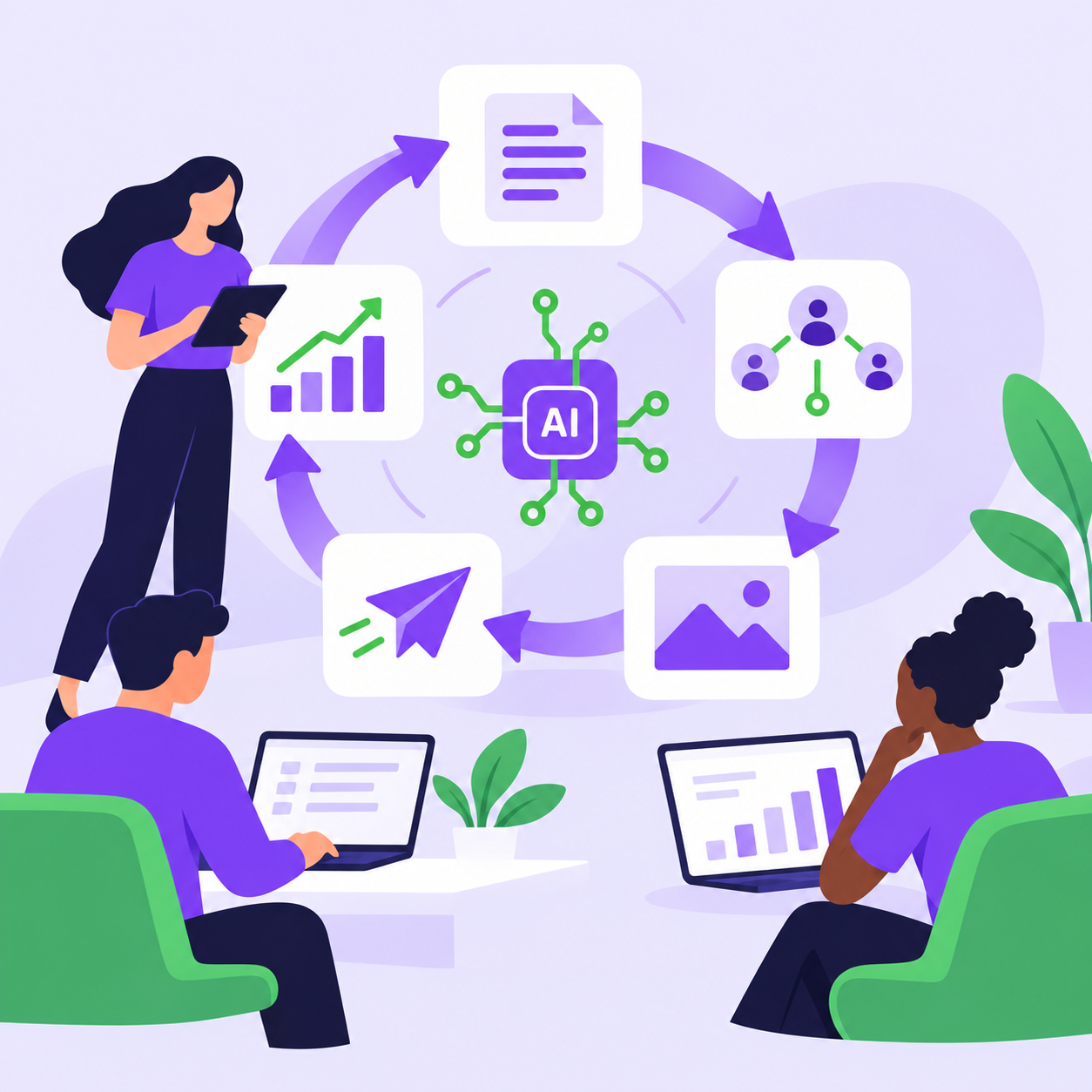
In an agentic workflow, AI sits across the whole lifecycle and carries context through all of it.
Why context is the whole thing
Here's what happens in a normal campaign lifecycle.
The brief is written. Strategy interprets it, losing some intent. Creative interprets strategy, losing more. Production interprets creative. Activation runs it. Measurement reports on it into a deck that lands three weeks after the next campaign already kicked off.
Every stage loses context, and the loop never closes. The institutional memory of what worked lives in six people's heads, and walks out the door when they do.
In an agentic workflow, what measurement learned is already in the next brief. Not as a slide someone might read. As an input.
That's the structural change, and it's bigger than the speed story.
Two consequences
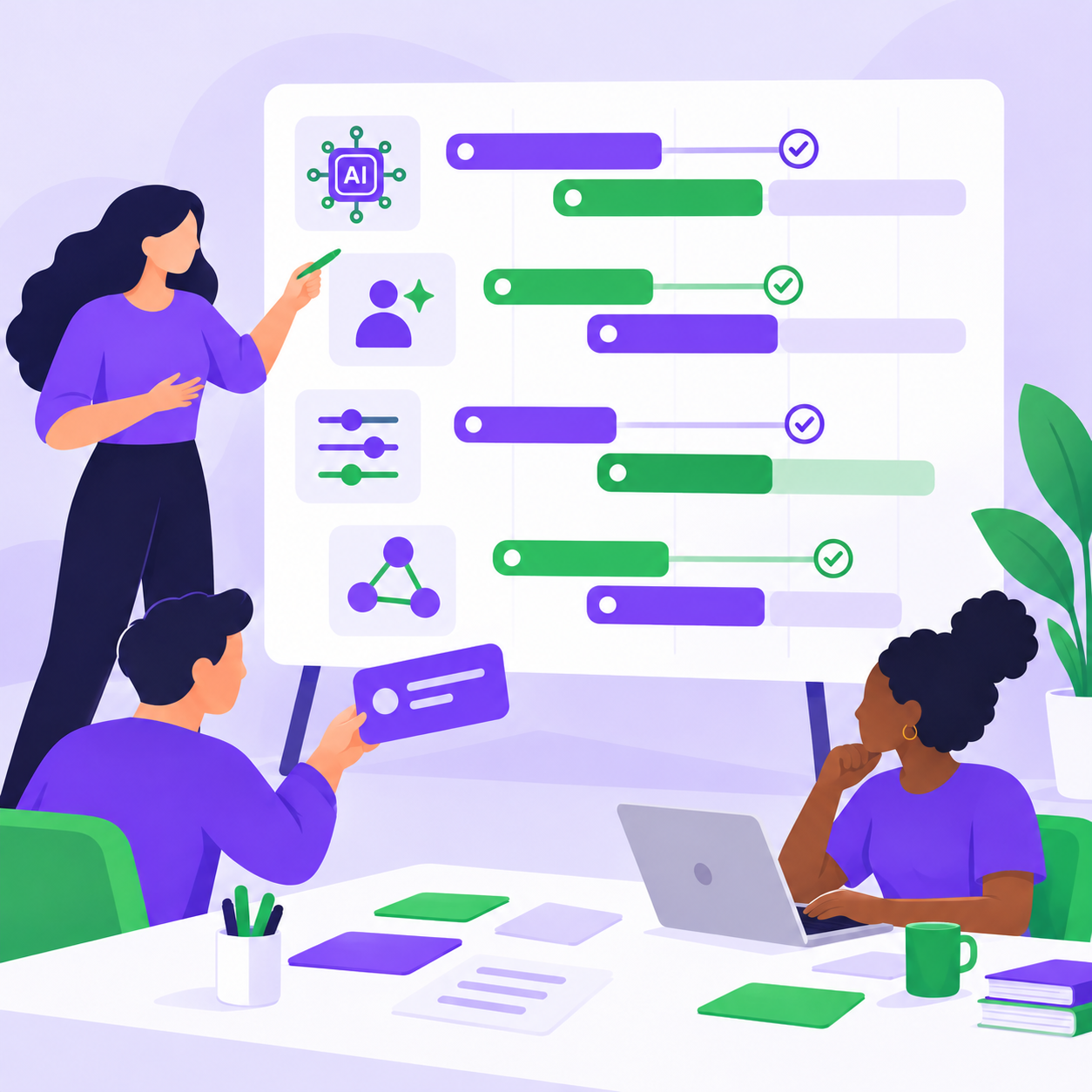
Compression. Nothing waits for a handoff, because there is no handoff. Work that took months of elapsed time, most of which was queueing, not working, collapses into days. Not because anyone is working faster, but because the gaps between working are gone.
Accumulation. Every campaign makes the next one smarter. Your twentieth campaign starts from a materially better place than your first: what the audience responded to, which creative territory worked, what the channel mix actually returned, all present rather than remembered.
That second one is the durable advantage. Speed can be matched by anyone who buys the same tools. Accumulated context can't. It's yours, it's specific to your brand and your customers, and it compounds.
Months of lifecycle in days, informed by every campaign before it.
Where the team goes
The team doesn't disappear. It changes position.
In the old model the team is a line: work passes down it, each person adding their piece. In an agentic workflow the team surrounds the work, with the strategist, planner, creative, copywriter, media, analyst positioned around a workflow that runs in the middle.
Their job shifts from producing every artifact to directing and reviewing. Setting the objective. Judging whether what came out is right. Catching the thing the system couldn't know. Deciding when to override.
Fewer handoffs. More judgment. The same people, doing the part of their job that was always the valuable part.
That's not a smaller team, necessarily. It's a differently shaped one, and it's why this stage is an organizational change, not a software purchase.
What's hard about it
Three things, honestly.
Data and access. An agentic workflow is only as good as what it can see. If your performance data, brand assets and customer research live in six disconnected systems with five owners, the workflow can't carry context because there's no context to carry.
Review discipline. Compression removes the natural checkpoints that handoffs provided. If you don't replace them deliberately, speed becomes a way to ship the wrong thing faster.
Trust, earned in the right order. Teams that start with their highest-stakes campaign learn nothing except that it's scary. Teams that start with something small and repeatable learn where the system is reliable and where it isn't, which is the only way anyone sensibly gets to the bigger stuff.
The move worth making this quarter
Don't boil the ocean.
Pilot one simple, repeatable use case with two or three people, and stitch it end to end. Something low-stakes enough that failure is informative rather than expensive, and repeated often enough that you get real reps.
Learn where it breaks. Then widen.
Wrap-up next: the four stages together, and how to start this quarter.
To learn more about any or all of these solutions, contact your Wripple Client Lead, or request a demo.
About this blog series: AI is changing what marketers can do and how marketing teams get work done. In this series, we explore the evolution of the AI-enabled marketing team, from giving every marketer an AI teammate to building connected, agentic workflows. The goal: human-led, AI-powered teams that deliver better work, faster.
This article explores Stage 4 of our four-stage approach to AI-enabled marketing teams. For the full framework, start with The Marketing Unicorn Is Still Human.
The first three stages make people and teams more capable. Stage 4 changes the unit of work.
In Stages 1 through 3, AI sits inside a task. Someone uses it to draft, research, produce, analyze. The task boundaries stay where they were: brief, then strategy, then creative, then production, then activation, then measurement, each with a handoff between them.
In an agentic workflow, AI sits across the whole lifecycle and carries context through all of it.
Why context is the whole thing
Here's what happens in a normal campaign lifecycle.
The brief is written. Strategy interprets it, losing some intent. Creative interprets strategy, losing more. Production interprets creative. Activation runs it. Measurement reports on it into a deck that lands three weeks after the next campaign already kicked off.
Every stage loses context, and the loop never closes. The institutional memory of what worked lives in six people's heads, and walks out the door when they do.
In an agentic workflow, what measurement learned is already in the next brief. Not as a slide someone might read. As an input.
That's the structural change, and it's bigger than the speed story.
Two consequences
Compression. Nothing waits for a handoff, because there is no handoff. Work that took months of elapsed time, most of which was queueing, not working, collapses into days. Not because anyone is working faster, but because the gaps between working are gone.
Accumulation. Every campaign makes the next one smarter. Your twentieth campaign starts from a materially better place than your first: what the audience responded to, which creative territory worked, what the channel mix actually returned, all present rather than remembered.
That second one is the durable advantage. Speed can be matched by anyone who buys the same tools. Accumulated context can't. It's yours, it's specific to your brand and your customers, and it compounds.
Months of lifecycle in days, informed by every campaign before it.
Where the team goes
The team doesn't disappear. It changes position.
In the old model the team is a line: work passes down it, each person adding their piece. In an agentic workflow the team surrounds the work, with the strategist, planner, creative, copywriter, media, analyst positioned around a workflow that runs in the middle.
Their job shifts from producing every artifact to directing and reviewing. Setting the objective. Judging whether what came out is right. Catching the thing the system couldn't know. Deciding when to override.
Fewer handoffs. More judgment. The same people, doing the part of their job that was always the valuable part.
That's not a smaller team, necessarily. It's a differently shaped one, and it's why this stage is an organizational change, not a software purchase.
What's hard about it
Three things, honestly.
Data and access. An agentic workflow is only as good as what it can see. If your performance data, brand assets and customer research live in six disconnected systems with five owners, the workflow can't carry context because there's no context to carry.
Review discipline. Compression removes the natural checkpoints that handoffs provided. If you don't replace them deliberately, speed becomes a way to ship the wrong thing faster.
Trust, earned in the right order. Teams that start with their highest-stakes campaign learn nothing except that it's scary. Teams that start with something small and repeatable learn where the system is reliable and where it isn't, which is the only way anyone sensibly gets to the bigger stuff.
The move worth making this quarter
Don't boil the ocean.
Pilot one simple, repeatable use case with two or three people, and stitch it end to end. Something low-stakes enough that failure is informative rather than expensive, and repeated often enough that you get real reps.
Learn where it breaks. Then widen.
Wrap-up next: the four stages together, and how to start this quarter.
Shannon Denton is Co-Founder and CEO of Wripple, an on-demand talent platform helping companies build and manage flexible marketing teams. Previously Global CEO of Razorfish, Shannon has spent his career at the intersection of technology, marketing, and organizational transformation. Today, he works with marketing leaders navigating the impact of AI on talent, teams, and operating models, with a focus on building more agile, high-performing organizations.
Building an AI-enabled marketing team? Wripple connects you with vetted freelancers, contractors, and micro-agencies to help you build the skills and capabilities your team needs.